

A-Spot vs G-Spot: Understanding Your Deep Vaginal Erogenous Zones
You've probably heard about the G-spot. But have you heard about the A-spot? And if you have, do you know how it differs from the G-spot? Do you know which one might create more pleasure for your particular body? Here's what I've found in my work with bodies and pleasure: many people are familiar with the G-spot concept but haven't encountered comprehensive information about the A-spot — despite it being an equally valid and potentially intensely pleasurable erogenous zone.
Understanding both — and how they compare — opens up a broader landscape of vaginal pleasure. It allows you to make informed decisions about exploration. It helps you understand that pleasure is a terrain with many destinations, and not all bodies respond to the same places the same ways. The A-spot is one of those deeper destinations worth discovering.
Where They Sit: Location and Depth
The most fundamental difference between the G-spot and the A-spot is their location along the anterior vaginal wall. The G-spot, as you may know, is located about two to three inches from the vaginal entrance on the front wall. It's relatively shallow and accessible, making it a good starting point for many people exploring deeper vaginal pleasure.
The A-spot is located much deeper — approximately three to four inches from the entrance, positioned on the anterior wall but closer to the cervix and the anterior fornix. Some sex educators describe the A-spot as sitting in the pocket or recess of the vagina that forms just before the cervix. This deeper positioning means that accessing the A-spot usually requires deeper penetration than accessing the G-spot, whether through fingers, toys, or a partner's penis or strapon.
To visualize this: if you were to trace a line along the front wall of your vagina starting from the entrance, the G-spot would be your first landmark, and the A-spot would be your second landmark, located further back toward the cervix. The anterior fornix — the anatomical pocket where the A-spot is located — is where the vaginal wall meets the cervical base, creating a deeper space that has its own nerve distribution and sensitivity patterns.
Anatomical Context: Why They Produce Different Sensations
Beyond location, the G-spot and A-spot exist within different anatomical contexts, which contributes significantly to their different sensations. The G-spot is part of the urethral sponge — the tissue surrounding the urethra that contains the female prostate and Skene's glands. This means G-spot stimulation involves tissue that's connected to reproductive function and has its own specific nerve distribution.
The A-spot sits within the anterior fornix, the pocket formed where the front of the cervix meets the front wall of the vagina. The tissue here has a different sensory profile. The anterior fornix is lined with tissue that's sensitive but in a different way than the G-spot tissue. Additionally, because of its proximity to the cervix, the A-spot's sensation often feels connected to or merged with cervical sensation. Some people describe A-spot pleasure as a combination of cervical and deep vaginal sensation.
This anatomical distinction means that the nerve pathways carrying sensation from these two areas are somewhat different. Your nervous system processes A-spot and G-spot sensation in different ways, potentially creating the different pleasure experiences many people report. Some neuroscience research suggests that the vagus nerve — which carries sensation from the deep pelvic organs including the cervix — plays a particular role in transmitting A-spot sensation, while the G-spot sensation travels through slightly different neural pathways.
What the Sensations Feel Like
Here's the question everyone asks: "What do they feel like, and how are they different?" The honest answer is that sensations vary dramatically from person to person. But certain patterns emerge consistently enough that they're worth describing.
G-spot stimulation, for many people, creates sensations that are localized and intense. Pleasure from G-spot touch often feels focused and acute — concentrated in one area and somewhat sharp or defined in nature. Some describe it as a building pressure or an electric sensation. It tends to feel more surface-level in comparison to deeper sensations. Because the G-spot is easily accessible, stimulation can feel more immediate and more controllable. Some people report that G-spot stimulation builds arousal quickly and feels more obviously erotic.
A-spot pleasure, by contrast, tends to feel deeper, more expansive, and sometimes more emotional. Because the A-spot is located deeper in the vagina and near the cervix, stimulation here often produces sensations that feel internal and full-body. Many people describe A-spot pleasure as a wave-like sensation that radiates outward, rather than a sharp, focused pleasure. The sensation often feels like it's happening deeper than the G-spot, and some people report that A-spot stimulation creates pleasure that feels more connected to their whole body rather than localized to one area.
Additionally, the A-spot's proximity to the cervix means that some cervical sensation often accompanies A-spot stimulation. If the cervix is an erogenous zone for you, A-spot exploration will likely involve some amount of cervical touch, and you'll feel both. For some people, this combination creates intensely pleasurable sensations. For others, if cervical sensation isn't their preference, the cervical component might make A-spot stimulation less appealing.
Finding and Stimulating Your G-Spot
Finding your G-spot is often the logical first step in exploring vaginal erogenous zones, given its shallow depth and accessibility. Begin when you're aroused — genuine arousal is essential, as it causes the urethral sponge to swell, making the G-spot more pronounced and easier to locate.
Use a clean finger or have your partner use theirs, inserting with the palm facing upward, toward your belly and pubic bone. This positioning naturally directs you toward the anterior wall. Once inserted a couple of inches, explore the anterior wall carefully. You're looking for a texture that differs slightly from the surrounding tissue — often described as bumpy or ridged, somewhat like the roof of your mouth.
When you locate it, experiment with touch. Many people respond to the come-hither motion, where you curl your finger in a beckoning gesture, applying consistent pressure to the G-spot. Others prefer sustained pressure, gentle massage, or small circular motions. Pay attention to what your body enjoys.
As you explore, you might notice sensations building — pressure, pleasure, or even an initial sensation of needing to urinate, which typically passes with continued stimulation and arousal. Some people experience significant pleasure response immediately. Others find that G-spot sensitivity develops over time with repeated, mindful exploration.
Finding and Stimulating Your A-Spot
Finding the A-spot requires going deeper than G-spot exploration, which means you need even greater arousal and relaxation. Begin by getting fully aroused — genuinely aroused. Allow time for your pelvic muscles to relax and for the vaginal space to open and expand. You might start with some G-spot exploration to warm up your body and increase arousal further.
Once deeply aroused, insert your finger (or have your partner insert theirs) and move past the G-spot, continuing deeper along the anterior wall toward the cervix. You're aiming for the pocket where the front of the cervix meets the vaginal wall — the anterior fornix. You might feel the cervix itself, or you might feel the smooth tissue of the fornix just before the cervix. The A-spot is in this zone.
Stimulation of the A-spot often feels best with firmer, more sustained pressure compared to G-spot touch. Many people find that applying steady pressure for several seconds, then releasing, then returning, creates the most intense pleasure. Some enjoy slow, deliberate strokes along this deeper zone. Unlike the come-hither motion that works well for the G-spot, A-spot pleasure often comes more from holding pressure and allowing deeper sensations to build.
Pay close attention to how your body responds. A-spot pleasure often builds more slowly than G-spot sensation, but for many people, the pleasure that does build feels more intense and more full-body. Some people report that A-spot stimulation, combined with continued arousal and perhaps clitoral touch, produces particularly strong pleasure responses or different types of orgasm.
Should You Explore One First?
Given that the G-spot is shallower and more accessible, most sex educators recommend starting with G-spot exploration before moving on to deeper zones like the A-spot. This makes practical sense — you'll likely locate your G-spot more easily, and the experience of finding it and discovering how it responds to stimulation builds confidence for exploring deeper.
Additionally, G-spot exploration requires less pelvic relaxation and arousal preparation than A-spot exploration. If you're new to internal exploration, the G-spot is gentler territory. You don't need to be as deeply aroused, and the sensation comes more easily and more quickly, which many people find encouraging and motivating.
However, this is not a rule. Some people find the G-spot less pleasurable and the A-spot more satisfying. If you're curious about deeper pleasure, you might choose to explore the A-spot. Or you might find that you enjoy both equally, or that you prefer one on some occasions and the other on different occasions. Your pleasure is unique. Trust what your body tells you.
Using Toys for Exploration
Toys designed for vaginal pleasure can be wonderful tools for both G-spot and A-spot exploration. Look for toys with a pronounced curve that directs the tip toward the front wall — toys marketed for G-spot stimulation are ideal. Many of these curved toys work equally well for A-spot exploration if you insert them deeply enough to reach that zone.
The advantage of toy exploration is that toys often provide more consistent, targeted contact than fingers alone, and you can adjust pressure and rhythm to find exactly what feels best. Many people also find toys easier to use for solo exploration, as the angle and depth are often easier to control than with finger exploration.
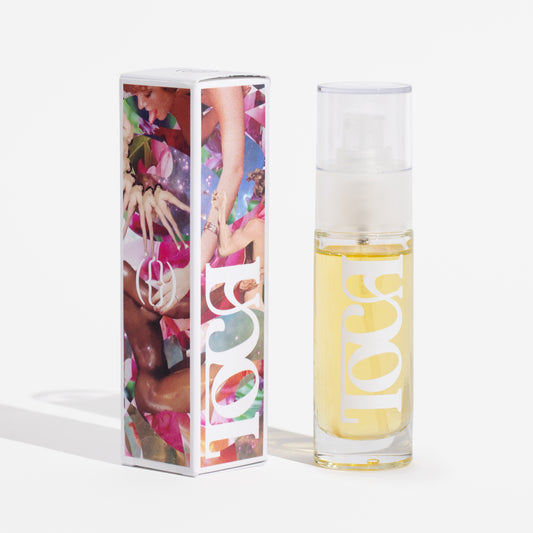
When using toys for A-spot or G-spot exploration, a botanical oil like Toto makes all the difference. The smooth glide means you can focus entirely on sensation and finding the right angles and pressures, without friction or discomfort. A quality intimate oil transforms toy exploration into a more luxurious, pleasurable experience where you can truly dial in what feels best for your unique body.
Whether you're just beginning to explore your G-spot or you're ready to venture deeper into the A-spot, TOCA's Toto botanical oil is your ideal companion. Formulated specifically for intimate exploration and massage, Toto's plant-based ingredients create a smooth, responsive glide that allows you to navigate both shallow and deep vaginal pleasure with comfort and confidence. The botanical blend means you can focus entirely on sensation discovery without worrying about harsh chemicals or irritation. Whether you're using fingers or toys, alone or with a partner, Toto transforms erogenous zone exploration into a connected, luxurious experience that honors your body's capacity for pleasure.
A-Spot vs G-Spot During Partnered Sex
Achieving consistent G-spot or A-spot stimulation during partnered penetration requires intentional positioning and communication. For G-spot stimulation, angles that allow your partner's penis, strapon, or fingers to contact the front wall at a slightly upward angle work best. Woman-on-top positions often work well because you control the depth and angle. Spooning from behind with a slight forward angle can also provide G-spot contact. Hands-on exploration together often works best for learning what angles and depths feel best, which you can then replicate during penetration.
A-spot stimulation during partnered sex is trickier because of its deeper location. Deep penetration positions work best, and consistent contact requires both depth and a forward angle. Woman-on-top positions where you control the angle and can position yourself to angle penetration toward the anterior wall can work. Positions where your partner enters from behind and curves forward — such as modified spooning — can also provide A-spot contact. The key is experimenting together to find angles where your partner's equipment naturally contacts this deeper zone.
Communication is essential. If neither of you is sure whether you're touching the right area, take time to explore with fingers or toys first, so you both understand what you're looking for. Once you've identified sensations you enjoy, you can work together to replicate them during partnered penetration.
A Practice: Comparing Your G-Spot and A-Spot
Begin aroused. Take real time for this. Touch yourself in ways that feel genuinely good to you.
Once aroused, insert a finger slowly. Move to your G-spot — two to three inches in on the front wall. What do you feel? Explore for a few minutes. Notice the sensations. Pressure? Pleasure? Notice.
Now, with your finger still inside, move deeper. Keep going along the anterior wall. Move past the G-spot, moving toward your cervix. Explore this deeper zone. What's different? How does it feel? Firmer pressure might feel better here. Sustained contact might feel better than movement.
Rest between explorations. Your body needs time to integrate sensations.
Over days or weeks, return to this practice. You're not rushing toward a conclusion. You're learning what your body enjoys. Both zones? Neither? Something in between? Trust what you discover.
Not Everyone Responds the Same Way
An important reality about both the G-spot and A-spot is that not everyone responds to them equally. Some people find G-spot stimulation intensely pleasurable while finding the A-spot less interesting. Others have the reverse experience. Some people enjoy both deeply. And some people explore both thoroughly and find neither particularly pleasurable, preferring other forms of vaginal stimulation or external pleasure.
This variation is completely normal and has to do with individual nervous system sensitivity, personal anatomy, and psychological responsiveness. There's no "should" when it comes to which erogenous zones feel best to you. Pleasure is individual, and the goal of exploration is understanding your own body and discovering what genuinely feels good to you, not conforming to an idealized list of zones you're "supposed" to enjoy.
Your A-Spot and G-Spot Questions
Can I stimulate both zones at the same time? Not really, since they're at different depths. However, during extended exploration or partnered play, you might transition between them as arousal builds and you relax into deeper sensations. Some people enjoy a progression from shallower to deeper stimulation as a way to build pleasure over time.
Which one should produce stronger pleasure? Neither inherently produces a stronger response — it's completely individual. Some people's bodies respond more intensely to G-spot stimulation; others respond more intensely to A-spot stimulation. Your unique nervous system and anatomy determine which is more pleasurable for you.
If I can't find my G-spot, should I skip to the A-spot? The A-spot is deeper and requires even greater arousal and relaxation to locate, so it's generally better to build confidence with G-spot exploration first. If G-spot exploration feels frustrating, a pelvic floor physical therapist can help identify whether muscle tension is interfering with your ability to feel internal sensations.
Is A-spot stimulation safe? Yes, A-spot stimulation is safe. The vaginal tissue is robust, and gentle to moderate stimulation of the anterior fornix poses no risk. As with all sensitive tissue, respecting your body's signals and avoiding painful pressure is important, but A-spot exploration is a normal part of sexual expression.
What if A-spot stimulation feels uncomfortable? Discomfort during A-spot exploration can stem from insufficient arousal, pelvic floor tension, or the fact that A-spot stimulation simply isn't pleasurable for your particular anatomy. If it feels uncomfortable, there's no obligation to continue exploring it. Focus on the areas that feel genuinely good to you.
Can the A-spot produce a different type of orgasm? Some people report that A-spot stimulation produces different sensations than G-spot stimulation or clitoral orgasm, and for some, it contributes to particularly intense orgasmic experiences. However, orgasm is highly individual, and what one person experiences may be completely different for another.
Do menstrual cycles affect G-spot and A-spot sensitivity? Yes, many people report that their G-spot and A-spot sensitivity fluctuates throughout their menstrual cycle. Some find these zones most sensitive during ovulation, others during different cycle phases. Tracking your own sensations across your cycle can help you identify when you're most likely to enjoy deep vaginal exploration.
Can I explore these zones with toys if I don't have a partner? Absolutely. Curved toys are wonderful for solo exploration of both the G-spot and A-spot. Many people find toys easier to use for solo play because they provide consistent stimulation and are easier to angle than fingers.